Clear running below the waterline
Growth from algae and mussels slows your boat down, increases fuel consumption and harms the hull. Even a thin layer noticeably changes how the boat handles. With our antifouling service, we protect the underwater section of your boat against heavy fouling.
A well-maintained underwater hull is the foundation for a relaxed season. The boat runs more freely, responds more directly and the hull stays protected. What matters is not the paint alone, but the preparation underneath it.
During the inspection, we also look out for anything unusual on the hull, such as damage to the gelcoat or along the waterline. Anything that goes beyond antifouling, we raise openly.
Our process
- Cleaning the underwater hull
- Careful surface preparation
- Application of a suitable protective coating
Thorough cleaning
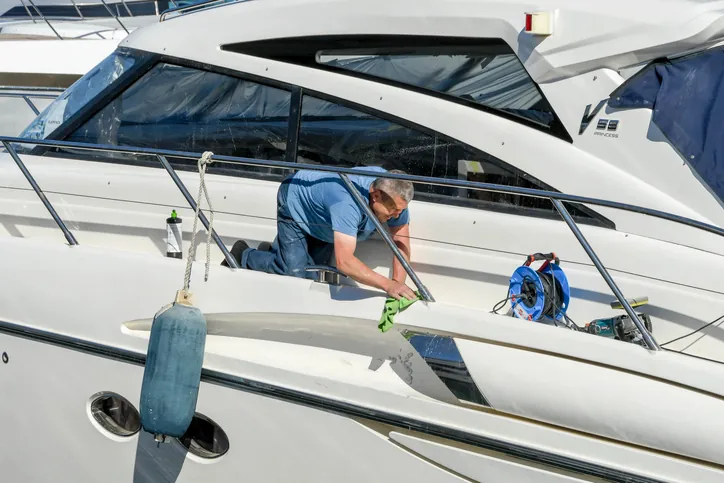
First, we remove growth, dirt and deposits from the underwater hull. Loose remnants of old coating are taken off. Only on a clean surface can we judge the condition of the hull and how the new antifouling needs to be built up.
Careful preparation
Preparation determines how long the result lasts. We check the existing coating and its compatibility with the new product. The surface is sanded and cleaned so the new layer adheres reliably. The waterline and adjacent areas are masked precisely so the edges run cleanly.
The right coating
Which antifouling makes sense depends on your waters and how you use the boat. Fresh water places different demands on a coating than salt water. A boat that moves often may need a different product than one that spends long periods at its mooring. The material and speed of the boat also play a role. Wood, GRP and metal each have their own requirements for the coating system. A product that works well on one hull can be unsuitable on another.
We advise you on the choice and apply the product according to the manufacturer's specifications. This includes film thickness, drying times and application conditions. We also observe the regulations that apply to your waters.
The right time
Antifouling is usually renewed before the start of the season. Plan your appointment early so your boat goes into the water on time. In spring, many slots are booked quickly, and depending on the weather the work needs time to dry.
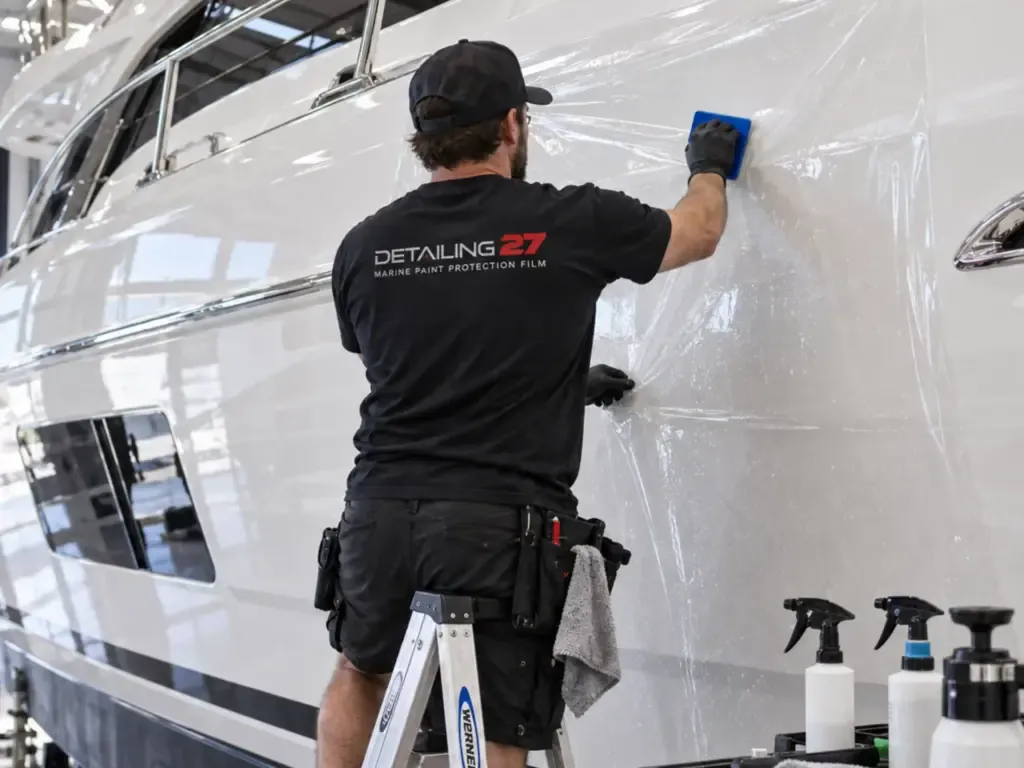
It makes sense to combine antifouling with a thorough boat cleaning. Hull, deck and upholstery are then cared for in one go, and your boat starts the season fully prepared. Heavily used areas above the waterline can additionally be protected with boat PPF paint protection film.
What you can expect
Professionally applied antifouling reduces fouling significantly. Depending on your waters and how long the boat lies, it cannot always be prevented completely. How long the protection lasts depends on the product, the water and how the boat is used. We tell you openly what you can realistically expect.
Frequently asked questions
How often does antifouling need to be renewed?
Often before every season. Depending on the product, your waters and the condition of the hull, the interval can differ. We discuss this during the inspection.
Can I choose the product myself?
Yes. We are happy to advise you and check whether your preferred product suits your boat, your waters and the existing coating.
Does the old coating have to be removed completely?
Not always. If the existing layer is intact and compatible, we can build on it. Loose or damaged areas are removed.
Antifouling in Hude for boat owners from Oldenburg, Delmenhorst, Bremen and the surrounding area. Get in touch and we will schedule your appointment in good time before the season.